Why Steel Remains One of the Most Sustainable Building Materials

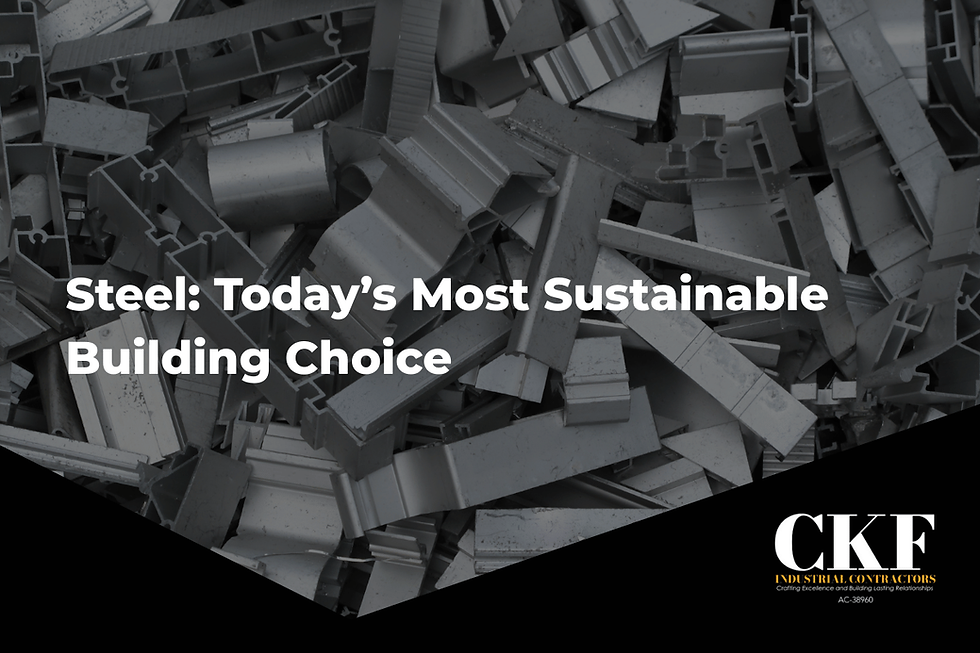
Each year, more than 630 million tons of steel are recycled — more than paper, plastic, aluminum, and every other consumer material combined.
Today, it’s also recognized as one of the most sustainable building materials, thanks to its recyclability, durability, and ability to reduce long-term waste. Whether used in large commercial projects or residential framing and roofing, steel offers a balance of performance and environmental responsibility that makes it stand out among other eco-friendly building materials.
If you’re exploring greener options for your next project, this guide covers why steel remains a top contender, how it compares to other green construction materials, and what makes it such an important part of environmentally friendly construction today.
What Makes Steel a Sustainable Building Material?
Unlike materials that break down or lose strength when repurposed, steel can be recycled repeatedly without losing quality. This allows recycled steel in construction to maintain the same strength and performance as new steel, reducing the need for raw material extraction and minimizing waste.
Modern production methods also support the sustainability of steel in construction. Many manufacturers now use electric arc furnaces (EAF) that rely heavily on recycled scrap, a cleaner and more efficient process than traditional steelmaking. EAF systems lower emissions, reduce reliance on mined raw materials, and help keep steel in continuous circulation across new projects.
Top 5 Benefits of Recycled Steel
1. Significant Reductions in CO2 Emissions
Recycling steel dramatically lowers greenhouse gas emissions. According to the World Steel Association, every ton of scrap used in steelmaking avoids roughly 1.5–1.8 ton of CO2, making it one of the most impactful ways to reduce carbon intensity in construction.
2. Massive Energy Savings
Producing steel from scrap in electric arc furnaces requires 60–80% less energy than making steel from raw ore. This not only cuts emissions but also reduces strain on power grids and lowers overall production impacts.
3. Conserves Natural Resources
Recycled steel reduces the need for mining and raw material extraction. Each ton of scrap conserves approximately 2,500 lbs of iron ore, 1,400 lbs of coal, and 120 lbs of limestone, helping protect natural landscapes and critical ecosystems.
4. Strength That Never Degrades
Steel is 100% and infinitely recyclable without losing its structural properties. This means recycled steel performs just as reliably as newly produced steel.
5. Supports a Circular Economy
Steel has one of the highest recovery rates in the world. About 85% of structural steel is recycled at the end of a building’s life, supporting a closed-loop system that minimizes landfill waste and maximizes material reuse.
Steel Compared to Other Sustainable Building Materials

When people ask, “What are sustainable building materials?” the list typically includes steel, wood, bamboo, and various composite products. While each has its place, steel brings a level of durability and recyclability that few other options can match. Here’s how it compares.
Steel vs. Wood
Wood is renewable and widely used, but it’s more vulnerable to rot, pests, moisture, and fire. These issues often require ongoing treatment or replacement, which reduces long-term sustainability.
Steel, on the other hand, does not warp, decay, or attract termites and carries excellent fire resistance. Its durability and recycled steel in construction advantages make it ideal for structural framing where longevity matters most.
Steel vs. Concrete
Concrete provides excellent compressive strength, but it is extremely energy-intensive to produce and difficult to recycle at the end of its life. Steel offers high strength with far fewer environmental impacts, especially when made using recycled scrap in electric arc furnaces.
Steel vs. Bamboo
Bamboo is fast-growing and renewable, making it a popular eco-friendly building material for smaller structures. However, it lacks the structural consistency required for large commercial or industrial applications, and it is sensitive to moisture, pests, and climate conditions.
Steel provides predictable strength, precision, and durability suitable for everything from homes to high-load industrial facilities.
Steel vs. Composite Materials
Composite materials can offer energy efficiency benefits, but they often rely on plastics or chemical binders and are difficult to recycle. Steel remains fully circular—100% recyclable and recoverable—while maintaining consistent performance over decades of use.
Steel and Extreme Weather Resilience
With hurricanes, wildfires, and flooding making headlines every year, resilience is now a core part of sustainable design. Steel delivers where many green materials fall short.
Light-gauge and structural steel frames can be engineered to meet or exceed local high-wind requirements in hurricane-prone areas, earn Class A fire ratings, and resist water damage and termite infestation completely.
Net-Zero-Ready Homes With Steel Framing
Steel framing plays a major role in high-efficiency home design. Cold-formed steel studs create walls that stay straight and stable over time, which helps keep the home airtight. When paired with continuous exterior insulation, steel framing reduces energy loss and eliminates common problems like thermal bridging that often occur in wood-framed homes.

Because the walls don’t warp, twist, or rot, the building envelope stays tight and efficient for decades. This makes steel an excellent option for builders aiming for Passive House, net-zero-ready, or other advanced energy-efficiency standards—without the long-term maintenance issues other materials can have.
The Real Carbon Impact Over a Building’s Lifetime
When people talk about sustainability, the focus is often on the carbon used to make the materials, but that’s only part of the story. What happens at the end of a building’s life matters just as much.
A wood-framed house that’s torn down after 60–80 years can send 40–50 tons of mixed debris to a landfill. In contrast, a steel-framed structure of the same size can be taken apart, and about 95–98% of the steel is recycled and melted down for reuse. None of its strength is lost, and the material goes right back into the supply chain.
Why Steel Will Continue to Lead Sustainable Construction
As builders and homeowners look for materials that deliver long-term performance with a lower environmental impact, steel continues to rise above other sustainable options. Its proven durability, circular use, and low carbon footprint make it a standout in modern construction.
Infinitely recyclable with no loss of strength
One of the highest recovery rates of any major building material
Significant CO2 reductions when scrap replaces raw ore
More efficient, lower-emission production through modern electric arc furnaces
Long-lasting durability that reduces replacements and long-term waste
Steel’s unique combination of longevity, circularity, and low environmental impact ensures it will remain a cornerstone of sustainable construction for decades to come.
Got a Steel Project in Mind in Hawaii?
CKF Industrial Contractors LLC specializes in building strong, sustainable structures that stand up to island conditions. Contact us today and let’s get your project moving.



The bathroom fittings section at Home Mart looks neatly categorized. Options are separated by type and use. Navigation seems simple and direct.