What Is Rebar? Why Concrete Needs Steel Reinforcement


Concrete is the most used construction material globally. It is incredibly durable and strong. However, one drawback of using concrete is that it may be subject to cracks under tensile force or flexural stress.
That is why rebar exists.
Rebar strengthens structures created from concrete and has been incorporated into virtually every aspect of modern construction; from residential foundation work and driveway construction to bridge construction, highway development and skyscraper construction.
Below we explore exactly what rebar is, what it's composed of, how it functions, and why it is essential in modern day construction practices.
What Is Rebar?
Rebar stands for "reinforcing bar," which is essentially a form of metal rod that is used to add strength to the base of a concrete slab. In nearly all cases, rebar is positioned inside a newly formed concrete slab prior to pouring the concrete so that it can provide the necessary strength and durability to the final product.
Why Does Concrete Need Reinforcement?
While concrete is capable of handling heavy loads and compressive forces exceptionally well, it is significantly weaker than other materials when subjected to tensional forces, bending forces, or movement. Prolonged application of these forces results in cracking and eventually structural failure.
Rebar aids in reinforcing the concrete to improve its capability to endure these stresses. The steel works in conjunction with the concrete to generate a composite that possesses greater strength and stability that enables the structure to manage heavier loads, vibrations, thermal expansion/contraction, and prolonged usage.
The combination of concrete and steel is what contributes to reinforced concrete being the number one material for construction worldwide.
Why Are There Ridges on Rebar?
Another characteristic of rebar that may draw attention is the rough textured surfaces found on rebar. These ridges function as a mechanical locking mechanism between the steel and the surrounding concrete.
If the rebar was entirely smooth, there would likely be significant displacement within the concrete under stress. The ridges aid in securing the steel within the concrete allowing it to operate as a singularly reinforced system. This enhances strength, stability, and resistance to movement over time.
What Type of Material Is Rebar Constructed From?
The majority of rebar is manufactured utilizing carbon steel because it provides an optimal balance of strength, durability, and affordability. Specialized forms of rebar are also constructed for specific areas of application that experience high levels of moisture, excessive salt exposure, or have potential for high levels of corrosion.
The selection of rebar type for a particular project primarily depends upon the conditions associated with the project and degree of durability required.
Common Types of Rebar
Carbon Steel Rebar
Carbon steel rebar (Grade 60 being the most common) is the most frequently used type of rebar in construction. Carbon steel rebar is strong, relatively inexpensive, and readily available for most reinforced concrete projects.
Epoxy Coating Rebar
Epoxy coating rebar features a protective coating applied to minimize corrosion. Epoxy coating rebar is generally employed in areas prone to moisture or humidity.
Galvanized Rebar
Galvanized Rebar is coated with zinc to minimize corrosion. Galvanized Rebar is often used in coastal regions or other wet climates where increased rust resistance is desired.
Stainless Steel Rebar
Stainless steel rebar has enhanced corrosion resistance and long term durability compared to traditional carbon steel. Stainless steel rebar is commonly employed in severe environments, or high-risk corrosion situations.
Fiber-Reinforced Polymer (FRP) Rebar
Fiber-reinforced polymer (FRP) rebar does not corrode like conventional steel rebar. FRP rebar is lightweight and highly corrosion-resistant. As such it serves as an ideal option for certain specialized applications.
Where is Rebar Used?
Rebar is employed in a variety of construction projects based on reinforced concrete. Common examples include:
Residential foundations
Bridges
Garage Parking structures
Driveway pavement
Retaining walls
Industrial structures
Pedestrian sidewalks and paved roadway surfaces
On larger structures, rebar grids or cages are typically established to ensure even load distribution through the entire length of the concrete.
What Happens When Rebar Corrodes?
When rebar begins to corrode, the corrosive expansion exerts internal pressure against the surrounding concrete. Eventually, this pressure can cause cracking, spallation, and structural degradation.
Corrosion occurs rapidly in coastal or high-humidity environments where high concentrations of salt, moisture and water can accelerate the rate of corrosion.
Rebar vs. Structural Steel
Both rebar and structural steel are constructed from metal, however each serves a vastly different purpose in building structures.
Rebar is utilized to add tensile strength to concrete and enhance its resistance to cracking/failure resulting from structural movement/shifting/deterioration.
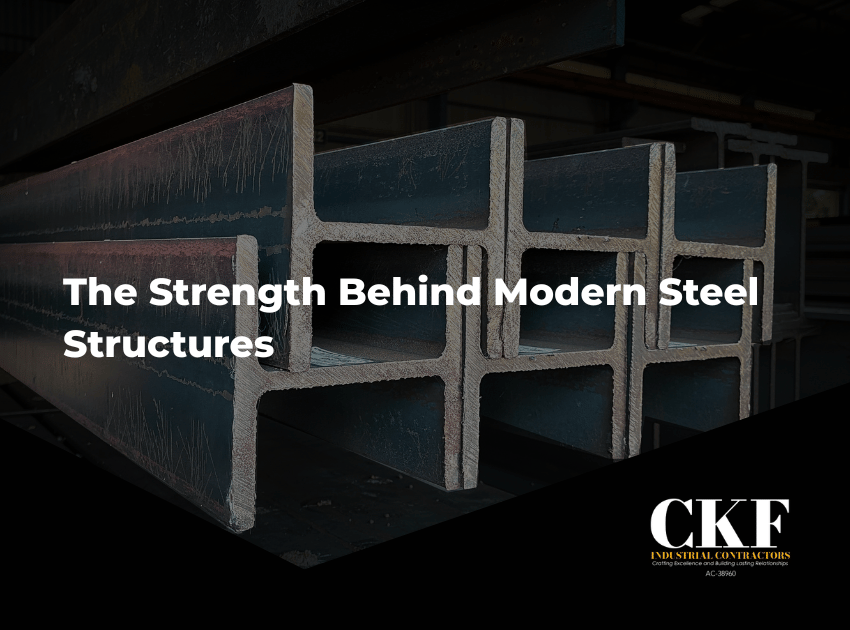
Structural steel, on the other hand, serves as a major component of the frame/Building's structural skeleton (i.e., beams/columns/framing).
In many construction projects, both structural steel and rebar are used together.
Conclusion
The use of reinforcing steel (rebar) in all types of construction greatly enhances the ability of concrete to resist tensile forces, movements caused by expansion or contraction of the concrete, as well as extreme weight.
As a result, reinforced concrete is used for virtually every type of structure from bridge and roadways, to high rise buildings and everything else in-between. Understanding the function and purpose of rebar will help you understand how structures made with concrete are designed to withstand time and usage.
Need Construction or Industrial Services in Hawaii?
CKF Industrial Contractors, LLC offers quality construction and industrial services in Hawaii. We offer structural steel fabrication, welding, industrial maintenance, equipment installation, and many other commercial and industrial services.
Please contact us today regarding your next project and let our experienced professionals assist you.


Comments